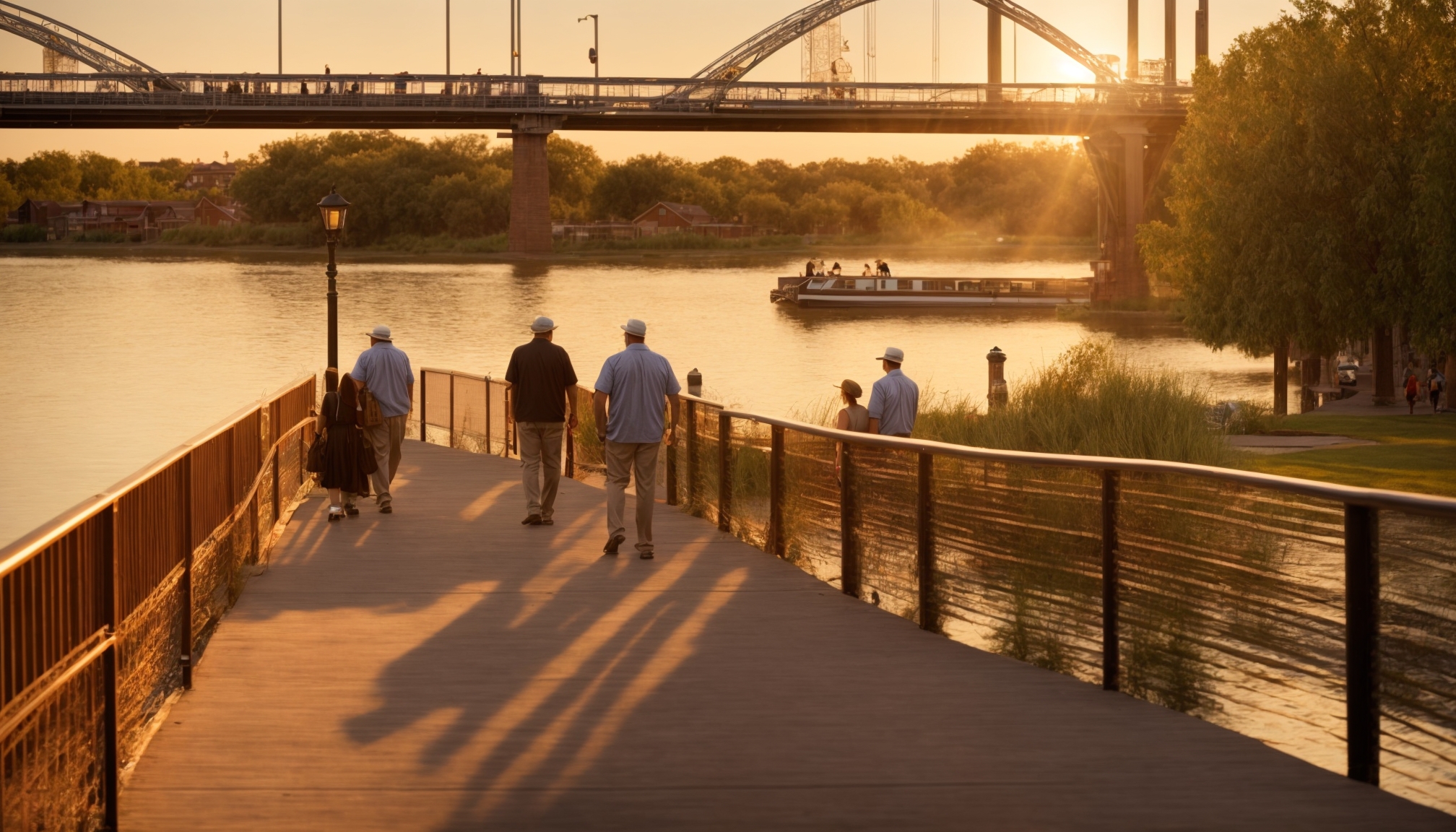
Meet Muscatine – Panduan Wisata dan Budaya, Muscatine – Riverfront attractions linked to the mississippi river muscatine tourism ecosystem now define the city’s identity and visitor economy.
The mighty waterway anchors every major visitor experience in the city. As a result, local planners align events, parks, and hospitality services with seasonal river patterns. The mississippi river muscatine tourism partnership influences how festivals are scheduled and how businesses prepare.
Hotels track river cruise arrivals and group bookings tied to waterfront tours. Meanwhile, restaurants design menus that highlight river views and sunset dining. Because the river is a constant visual presence, it becomes the main stage for both residents and tourists.
Visitor surveys show that many guests choose the city specifically for its accessible waterfront. Therefore, keeping the riverfront clean, walkable, and active becomes a central development priority. The mississippi river muscatine tourism corridor keeps evolving as new trails and viewing spots open.
Muscatine’s riverfront park system turns the shoreline into an outdoor living room. Paved trails attract runners, cyclists, and families looking for open space. The mississippi river muscatine tourism strategy uses these amenities to extend visitor stays.
Benches, overlooks, and landscaped areas encourage people to linger and take photos. In addition, interpretive signs explain river history, ecology, and industry. These details give guests stories to share and reasons to return with friends.
Event organizers often select riverfront parks as venues for concerts and community gatherings. Because the water forms a dramatic backdrop, performances feel more memorable. The mississippi river muscatine tourism draw is strongest when music, food, and scenery align.
The tourism pattern shifts when visitors step onto the river itself. Guided cruises, small-boat rentals, and paddling experiences create deeper connections to the landscape. The mississippi river muscatine tourism appeal grows when travelers can see bluffs, wildlife, and bridges from the waterline.
Operators schedule trips around weather, river levels, and daylight hours. However, demand usually rises during warm months and fall foliage season. Captains often share stories about navigation, floods, and regional commerce, adding educational value to every outing.
Many tour packages bundle river cruises with dining, lodging, or museum visits. On the other hand, some independent travelers simply walk the docks and watch barge traffic. The mississippi river muscatine tourism blend of structured and casual experiences suits many types of guests.
The city’s historic nickname, the “Pearl of the Mississippi,” still influences branding and storytelling. Museums and cultural centers highlight river trade, industry, and immigration. The mississippi river muscatine tourism narrative includes both prosperity and resilience.
Heritage walking tours often connect downtown architecture with waterfront stories. Guides describe how river commerce shaped warehouses, rail lines, and neighborhoods. Because history remains visible in brick facades and river views, visitors can easily imagine earlier eras.
Read More: Discover riverfront attractions, historic downtown districts, and scenic trails in Muscatine Iowa
Seasonal exhibits sometimes focus on floods, river engineering, or ecological restoration. These themes show how communities adapt to natural forces over time. The mississippi river muscatine tourism experience becomes richer when guests engage with these deeper stories.
Major gatherings cluster around the waterfront during key times of year. Fireworks, food festivals, and music events all rely on open views of the river. The mississippi river muscatine tourism calendar often peaks when the weather supports long evenings outside.
Vendors and performers benefit from natural foot traffic along the riverwalk. Families can watch boats, listen to bands, and explore food stands in one loop. Therefore, event planners design layouts that keep the river visible from most activity zones.
Meski begitu, weather and river conditions can force rapid adjustments. High water or storms may change scheduling or stage placement. The mississippi river muscatine tourism sector invests in contingency plans to protect both visitors and infrastructure.
River-centric tourism brings direct spending to hotels, restaurants, and shops. Overnight guests often choose rooms with waterfront views, even at higher rates. The mississippi river muscatine tourism links become clear in occupancy data during peak seasons.
Downtown storefronts near the river see increased walk-in traffic on event days. Cafes and bars capitalize on patio seating that overlooks the water. Because visitors photograph these scenes, the city gains free promotion on social media.
Local leaders monitor how riverfront investments affect job creation and tax revenue. Akibatnya, long-term plans frequently prioritize trail extensions, lighting, and streetscape upgrades. The mississippi river muscatine tourism focus helps justify these public improvements.
Any river city must balance charm with caution. Flood events shape building codes, park design, and infrastructure decisions. The mississippi river muscatine tourism sector depends on reliable, resilient public spaces.
Engineers and planners work together to elevate certain structures and protect key utilities. In addition, some areas use flexible surfaces or removable features that can withstand high water. These designs reduce recovery time after storms.
Environmental programs promote clean water, habitat restoration, and responsible recreation. The mississippi river muscatine tourism model increasingly highlights sustainability as a core value. Visitors now expect destinations to care for their natural assets.
Online platforms extend the reach of the waterfront far beyond the city limits. Drone photos, time-lapse sunsets, and event videos showcase the river’s changing moods. The mississippi river muscatine tourism brand grows each time content circulates across travel channels.
Local organizations coordinate messaging so that maps, brochures, and websites align. After that, travelers can easily plan routes that combine parks, museums, and dining. Clear storytelling helps turn a simple drive-by stop into a full weekend visit.
Looking ahead, new attractions and upgraded facilities will likely deepen the mississippi river muscatine tourism connection. As more visitors seek authentic waterfront communities, the city can leverage its scenery, history, and hospitality. With careful planning, the mississippi river muscatine tourism engine will continue to support a vibrant riverfront economy for years to come, strengthened by this mississippi river muscatine tourism experience.